Mattress Guide · Construction & Comfort
How Innerspring Construction Shapes Support, Bounce, and Airflow
An innerspring mattress is more than a grid of coils. Its support system, comfort layers and edge construction work together to determine how the bed feels beneath you: buoyant or cushioned, quietly stable or lively, open to airflow or more enveloping. Understanding those details makes it easier to look beyond broad labels and find a design that suits your sleep.
Published 18 October 2026
The architecture beneath the surface
Innerspring beds have a straightforward premise: a metal coil system supports the body, while upholstery and comfort layers soften the surface. Yet that simple description covers a wide range of constructions. Two mattresses can both be called innerspring and feel strikingly different because their coils vary in shape, arrangement, gauge and connection—and because the materials above them can be thin, plush, responsive or deeply contouring.
It helps to think of a mattress as a small structure with distinct jobs. The spring unit provides the underlying support and much of the bed’s characteristic lift. The comfort layers influence pressure relief and the first impression when you lie down. The border, quilting and foundation contribute to stability and how consistently the whole system performs. These parts are interdependent: a spring system cannot be judged by its coil count alone, just as a soft top layer does not tell you what the bed will feel like after settling into it.
For shoppers, the useful question is not simply, “Is it an innerspring?” It is: “How is this particular mattress built, and what will that construction mean for my body, sleep position and preferences?”
Coil design: connected, pocketed and everything between
Traditional interconnected systems link coils together so that pressure on one area can influence neighbouring springs. The connected structure can create a familiar, unified feel, with noticeable bounce and broad, even support. Depending on the design, it may also mean that movement carries more readily across the surface. That effect is not identical in every mattress: coil shape, the way the unit is joined and the thickness of the upholstery all make a difference.
Pocketed coils take a different approach. Each spring sits in its own fabric pocket, allowing it to respond more independently to pressure. In principle, this can help the mattress adjust locally beneath the shoulders, hips and other contact points, while limiting the spread of movement. The outcome depends on the complete construction, including spring tension, pocket layout and the layers above. A pocket-spring label alone does not guarantee a particular firmness, degree of motion isolation or level of contouring.
Some beds use nested or layered spring systems, combining more than one coil arrangement. These constructions can create a more graduated response, but complexity is not automatically a measure of suitability. A simpler unit with appropriate upholstery may feel more comfortable than an elaborate one that does not match your needs. What matters is how the design behaves under your weight and in your usual sleeping position.
Manufacturers may also describe coils as zoned, with different support characteristics across parts of the mattress. The intention is to vary the response beneath areas such as the torso and hips. Whether that zoning feels helpful depends on the sleeper’s height, build and preferred position, as well as whether the zones align with the body when lying down. If possible, try the mattress in your normal posture rather than assuming that a technical feature will suit everyone.
What coil count can—and cannot—tell you
Coil count is one of the most visible figures in mattress descriptions, but it is not a complete measure of support or quality. Counts can be stated for different sizes, and a larger number may reflect smaller coils rather than a more supportive design. Coil shape, steel characteristics, arrangement and the materials surrounding the unit matter too. A headline number is best treated as one piece of construction information, not a verdict.
For a more useful comparison, ask what the stated count refers to, whether it describes the full mattress or a particular layer, and how the coil system is designed to work with the comfort materials. Also consider whether the bed has a noticeable transition between its surface and support core. When testing, look for even support rather than focusing on whether the mattress feels impressively springy in a shop.
Spring tension and firmness labels require similar caution. A mattress marked “firm” may feel different from another firm model because the comfort layers, spring response and your own body all shape the sensation. A firmer surface is not automatically better for every back or every sleeper. Comfort and alignment are individual; a label is a starting point for comparison, not a substitute for trying the bed.
Support and pressure relief are a partnership
Support describes how well a mattress helps maintain a comfortable, reasonably aligned posture. Pressure relief is about how the surface accommodates the body’s contact points. These are related, but they are not interchangeable. A bed might feel firm yet create pressure around the shoulder for a side sleeper, while a plush surface may feel welcoming at first but lack the underlying support someone needs.
In an innerspring mattress, the coil unit supplies much of the foundational response. The upholstery then determines how gradually the body meets that support. Cotton, wool, foam, latex and other materials compress and recover in different ways. A thin comfort layer often lets the spring character come through more clearly. A deeper or softer layer can create more cushioning and contour, though it may also make the bed feel less immediately buoyant.
Side sleepers commonly pay close attention to cushioning at the shoulders and hips, where pressure can build if the surface does not accommodate those areas. Back sleepers may prefer a balance that supports the midsection while allowing the body to settle comfortably. Stomach sleepers often look for a surface that does not let the hips sink excessively. These are useful considerations, not rigid rules: body shape, weight, personal comfort and any existing health concerns can change what feels right.
Weight also influences how deeply a person compresses a mattress. The same model may feel firmer to one sleeper and softer to another. If two people share a bed, each can experience the same construction differently. Testing together, when possible, gives a more realistic sense of comfort and movement than trying the mattress alone.
Bounce: a feeling, and a functional detail
The lively response associated with an innerspring bed comes from the coils’ ability to compress and rebound. Some people enjoy that buoyancy because it can make changing position feel easy and prevent the surface from feeling deeply enveloping. Others prefer a quieter, more cushioned sensation. There is no universally ideal amount of bounce; the right level is the one that feels comfortable and practical for the sleeper.
Comfort layers can temper the springiness. A responsive material may follow the coils’ movement, while a more conforming layer can absorb some of the sensation. Upholstery thickness, quilting and the mattress’s overall tension also influence how quickly it returns after pressure is removed. That is why two beds built around springs can range from lively and traditional to comparatively restrained and contouring.
For couples, bounce and motion transfer deserve separate consideration. A mattress can feel responsive without disturbing a partner significantly, particularly if its spring system and comfort layers limit movement across the surface. Conversely, a very lively feel may make movement more noticeable. Try a simple test: have one person lie still while the other changes position. It is not a laboratory assessment, but it can reveal whether the bed’s movement feels distracting to you.
Airflow and the question of sleeping temperature
Coils leave open spaces within the support core, which can allow air to move more freely through that part of the mattress than in a dense, solid structure. This is one reason innerspring designs are often associated with a more open, ventilated feel. But airflow through the core is only one part of thermal comfort. The cover, quilting and comfort layers have an important role in how warm or cool the bed feels against the body.
A thick layer of foam or other cushioning can reduce the sense of openness, even when the mattress contains springs. Natural fibres such as wool and cotton may contribute a different surface feel and interact with warmth and moisture differently from synthetic materials. The room’s temperature, bedding, sleepwear and personal physiology matter as well. No construction can promise that every sleeper will stay cool throughout the night.
If temperature is a concern, consider the entire sleep system rather than focusing only on the coil unit. Ask what materials sit nearest the sleeping surface and whether the mattress is designed with ventilation features. Keep in mind that a protector, topper and heavy duvet can change the feel of the bed. For example, a wool-filled topper may add cushioning and help moderate the surface feel, but it also introduces another layer between the sleeper and mattress. A wool-filled mattress topper illustrates how an accessory can alter comfort without changing the underlying spring construction.
Edge support and the usable sleep surface
The perimeter of a mattress matters in everyday use. Stronger edge construction can make it feel more stable when sitting on the side and can provide a more consistent surface for people who sleep close to the edge. Some mattresses use reinforced borders or particular stitching methods to help maintain this support. Others may compress more noticeably at the perimeter.
Edge feel is not simply a matter of whether the mattress has springs. The border materials, coil layout, upholstery and base all contribute. When trying a bed, sit at the edge briefly, then lie near it in your usual position. Notice whether you feel secure and whether the mattress surface remains comfortable. If the bed is shared, check the usable width rather than assuming that the centre is the only area that matters.
A real-world construction example
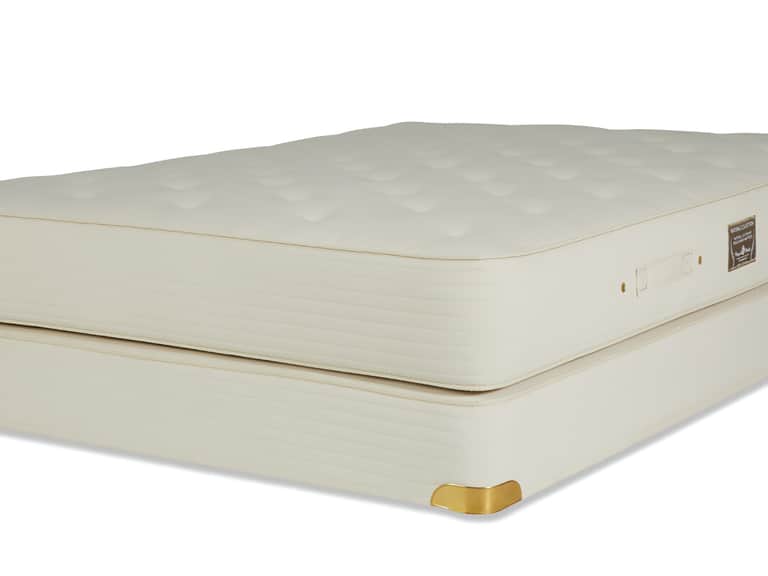
Product descriptions can make technical features easier to understand when read as construction notes rather than promises. The Royal-Pedic Natural Cotton Mattress with Wool Wrap, for example, is described as having a traditional innerspring system, cotton padding and a wool wrap. Those details point to a spring-supported mattress with natural-fibre upholstery, but they do not by themselves establish whether it will suit a particular sleeper. Firmness, pressure relief and temperature comfort still need to be judged in person or against a clear, trustworthy return policy.
This is the broader lesson when reading a specification: identify the spring arrangement, the surface materials and the way the mattress is finished, then relate those features to the qualities you care about. A detailed description can support an informed comparison, but it cannot replace your own experience of the bed.
How to compare innerspring mattresses
Shopping becomes more focused when you translate preferences into questions. Rather than beginning with a fashionable material or a single technical number, establish what you want the bed to do. Consider whether you prefer a firm, buoyant surface or more cushioning; whether you sleep mostly on your side, back or front; and whether you share the mattress with someone whose movements you notice.
- Ask about the spring system. Is it interconnected, pocketed, zoned or layered? What does the design aim to provide?
- Read the comfort-layer description. Find out what materials sit above the coils and how thick or substantial those layers are.
- Test your usual sleep position. Lie down long enough to assess pressure and support, rather than relying on a quick sit or bounce.
- Consider movement as well as comfort. If you share the bed, check how much motion you notice when your partner changes position.
- Check the edge and the base. Perimeter stability and foundation compatibility can affect the experience of the complete bed.
- Look beyond broad firmness labels. Compare construction details and understand the retailer’s trial, returns and warranty terms.
- Account for the whole sleep setup. A topper, protector, duvet and bed base can all influence the final feel.
In the UK, verify measurements carefully before ordering. Mattress names and sizing conventions can differ between retailers, and the bed frame or divan should be compatible with the mattress dimensions and any manufacturer guidance. A good buying decision includes logistics: delivery access, setup, removal of an old mattress, trial conditions and what happens if the bed proves unsuitable.
Common assumptions worth revisiting
“More coils always means better support.” Not necessarily. Counts are meaningful only in context, and coil design and comfort layers matter just as much.
“All innerspring mattresses are bouncy.” Springs contribute responsiveness, but upholstery can soften or moderate that feel. The result varies widely.
“A spring mattress is automatically cooler.” The core may allow airflow, but the surface materials, bedding and room conditions also affect warmth.
“Firmness is the same as support.” Firmness is a perception of surface feel; support concerns how the mattress accommodates the body. A comfortable bed needs an appropriate balance of both.
“Pocket springs always stop partner movement.” Independent response may reduce motion transfer, but no design guarantees that a partner will feel nothing. Test the mattress if this is a priority.
The final measure is how the bed works for you
Innerspring construction offers a vocabulary for understanding a mattress, not a shortcut to choosing one. Coil arrangement helps shape support and responsiveness; comfort layers tune pressure relief and surface character; open space in the spring unit can contribute to airflow; and the border affects how confidently you can use the full mattress. Each feature has meaning, but none exists in isolation.
Begin with your own sleep habits, then compare the details that are most relevant: the feel you prefer, the pressure points you need to accommodate, how much movement you can tolerate and how warm you tend to sleep. A thoughtful test and clear questions will tell you more than a dramatic coil count or an appealing label. The best innerspring mattress is not the one with the most elaborate specification. It is the one whose construction translates into comfortable, dependable nights for the person sleeping on it.