Mattress materials · Sleep comfort · Buying guide
What Makes a Luxury Sleep Surface Worthwhile? Materials, Craft, and Value
Luxury is not a single specification, nor is it a promise that every sleeper will wake feeling transformed. A considered mattress earns its place through the details: the way materials shape comfort, the care invested in construction, and the degree to which the whole design suits the person sleeping on it.
Published 3 November 2026
A bed is one of the most personal purchases a household makes. It is used for hours at a time, night after night, and its qualities are felt rather than merely seen. In this setting, luxury can mean a breathable wool surface, individually responsive springs, a thoughtfully layered latex core or a border finished to make the edge feel as considered as the centre. It can also mean an elegant cover and careful handwork. These details are not interchangeable: some influence how a mattress feels and performs, while others are primarily a matter of finish or preference.
The more useful question, then, is not whether a mattress is luxurious in the abstract. It is whether its materials, construction and upkeep make sense for your body, sleep habits and expectations. A premium price is most persuasive when it corresponds to tangible qualities you value—and when those qualities continue to matter after the novelty of a new bed has passed.
This guide explores what to look for in luxury mattresses, how to interpret the language of mattress materials, and how to weigh durability against cost. The aim is not to crown one style or price bracket, but to help you distinguish practical benefits from beautiful details that may not be essential to your own sleep.
Luxury begins with the feel, not the label
In everyday conversation, “luxury” often suggests softness. Yet a lavishly cushioned surface is not automatically a comfortable or supportive one. A mattress should allow the body to settle without creating excessive pressure at the shoulders and hips, while also supporting a comfortable sleeping posture. How that balance feels depends on sleeping position, body shape, weight, temperature preference and personal taste.
Side sleepers often appreciate enough cushioning for the shoulder and hip to sink in modestly, while back sleepers may prefer a surface that feels more evenly supportive. Stomach sleepers commonly need to consider whether a deeply cushioned top allows the middle of the body to dip uncomfortably. These are useful starting points, not rules: two people with the same preferred position may have different needs and describe the same mattress very differently.
Comfort also has a distinctly sensory dimension. Some sleepers like the close contour of foam; others prefer the buoyant, more immediate response of latex or springs. A pillow-top can add a softer first impression, while a firmer underlying core may keep the overall feel more composed. When testing a mattress, spend time in your usual sleeping position and notice not only whether the surface feels inviting, but whether you feel supported after several minutes.
Terms such as “plush,” “firm,” and “medium” are not universal measurements. Retailers and manufacturers may use them differently, and a mattress can feel different on a flexible base than on a solid platform. Treat descriptions as clues, then verify them through a suitable in-person trial, a clear home-trial policy, or both.
Materials that change the experience
Materials matter because they influence the way a sleep surface responds to pressure, handles warmth and moisture, and feels against the body. They do not, by themselves, guarantee a particular result. Fibre quality, layer thickness, construction, cover fabric and the support system beneath the comfort layers all contribute to the finished mattress.
Wool and cotton: breathable, tactile layers
Wool and cotton appear in many traditional and premium constructions. Wool is hygroscopic, meaning it can absorb and release moisture vapour; manufacturers use it in bedding and mattress layers for its moisture-managing and temperature-buffering qualities. Cotton is valued for its familiar, breathable feel and its use in ticking and quilted covers. The experience depends on the quantity, preparation and placement of the fibres—not simply the fact that a label names them.
Natural fibres can also require particular care. A wool-filled topper, for example, may call for airing or spot cleaning rather than machine washing. Before choosing a surface for its material story, check the care instructions and consider whether they fit your household’s routines. A fibre that sounds appealing in a product description is most worthwhile when its qualities suit both your sleep preferences and your willingness to maintain it.
Latex: buoyant, responsive support
Latex is often chosen for its springy, resilient feel. Rather than sinking in quite like some slow-response foams, it tends to push back more readily as the sleeper moves. Some people enjoy this buoyancy and find it easier to change position; others prefer a closer, more enveloping sensation. “Natural latex” describes the material’s origin, but shoppers should still ask what the mattress contains and how its layers are arranged.
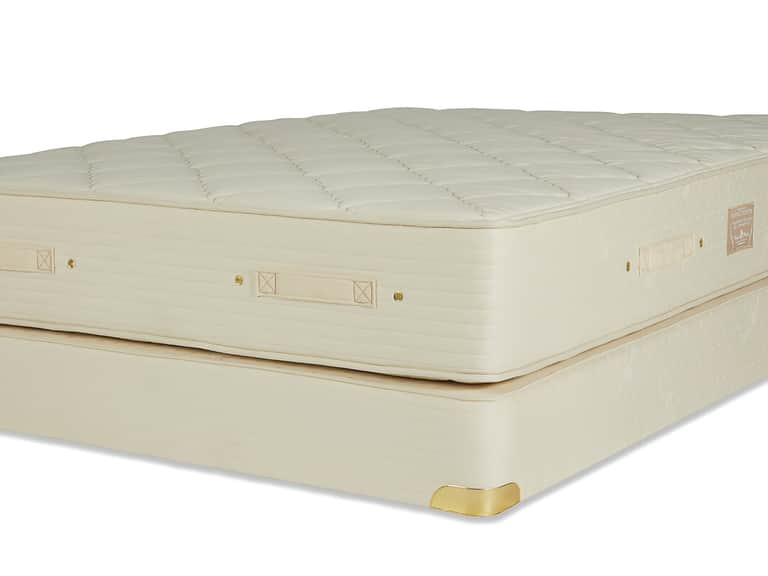
A layered latex design can combine a more supportive central core with softer material above or below it. For example, the Royal-Pedic Premier Natural Latex Quilt-Top Mattress is described as having a 10-inch latex core, with a medium centre and softer latex layers on both sides, beneath a cotton-and-wool quilted cover. Its flippable construction may appeal to someone looking for a two-sided design, but suitability still depends on whether its feel and support work for the individual sleeper.
Pocket springs: local response and airflow
In a pocket-spring mattress, springs are encased individually rather than linked as one continuous unit. This arrangement allows springs to respond separately to pressure across the surface. Depending on the design and other layers, that can contribute to a more locally responsive feel. Spring count alone, however, is not a complete measure of comfort or quality. Spring gauge, arrangement, mattress size, surrounding upholstery and the quality of the whole build also matter.
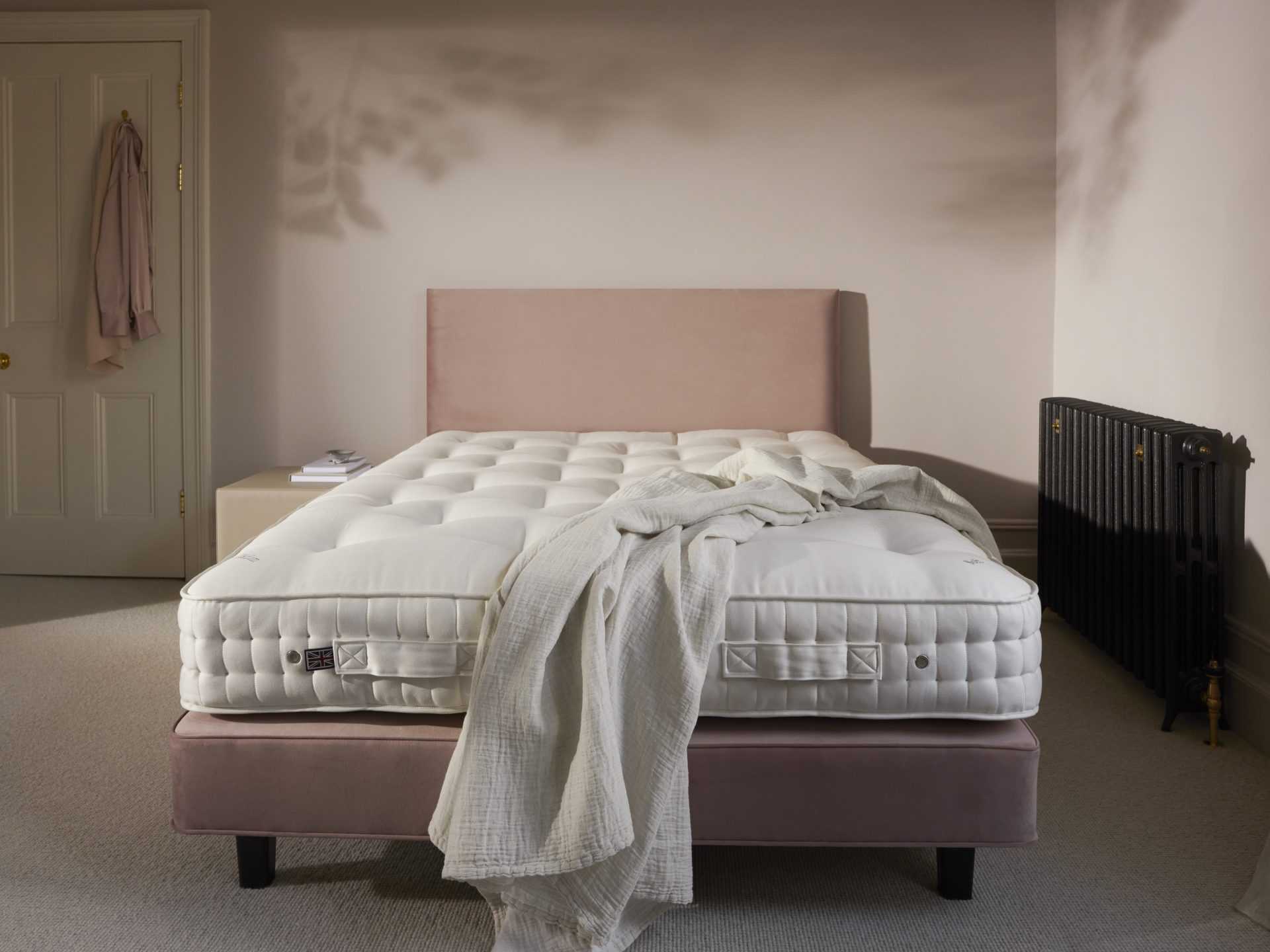
Some premium mattresses pair pocket springs with natural-fibre upholstery. The Vispring Elite, for instance, is described as using individually encased vanadium-steel pocket springs with British wool and cotton layers. Its hand-tufting and hand-side-stitched border are construction features worth examining in person: they speak to how the mattress is assembled, though they do not make it automatically right for every body or bedroom.
Foam and hybrid combinations
Foam layers can contour closely, soften pressure points and create a more unified surface. Their feel varies considerably by formulation, density, thickness and design; some are more responsive than others. Hybrids combine foam or other comfort layers with a spring support core, bringing together cushioning and a springier foundation. This can be appealing to sleepers who want elements of both, but the balance varies from mattress to mattress.
As with any construction, ask what each layer is intended to do. A clear explanation is more useful than a long list of technical terms. If a mattress is described as cooling, zoned or pressure-relieving, look for a precise account of the design and test whether the sensation is comfortable for you.
Craft is found in the structure
Good mattress construction is about more than a polished surface. It includes how the comfort layers are secured, how the support system is assembled, how the perimeter is finished and whether the mattress can be turned or rotated. These decisions affect feel, care and the usable life of the bed.
Hand-tufting, for example, anchors layers through the mattress at intervals. In a well-designed build, this can help keep fillings from migrating or gathering unevenly. Side-stitching reinforces the border and can contribute to a firmer edge. These are not decorative flourishes alone, but their practical value should be understood in context: no single technique compensates for unsuitable comfort, poor support or a base that is not compatible with the mattress.
Layering is equally significant. A surface can feel soft at first touch while relying on firmer layers below for support. Conversely, a mattress with a resilient core may have a comparatively plush quilted top. Request a layer-by-layer description, including material names and thicknesses where available. Ask whether the construction is the same on both sides, and whether the manufacturer recommends flipping, rotating or simply turning the mattress from head to foot.
For a two-sided mattress, the ability to alternate sleeping surfaces may be an advantage if the model is designed for it and the owner is comfortable with the necessary care. Many contemporary mattresses are one-sided and should not be flipped. Follow the maker’s guidance rather than assuming that turning every mattress will extend its life.
Durability: look beyond the warranty
A long-lasting mattress is not defined by one material claim or a generous-sounding warranty. Longevity depends on the materials and construction, the weight and movement placed on the bed, the foundation beneath it, room conditions and care. Even a finely made mattress will eventually change with use; its comfort may soften or its support may no longer suit its owner.
Ask what the warranty covers and what it excludes. A warranty may address specific manufacturing defects or measurable body impressions, but it is not necessarily a guarantee that the mattress will feel exactly the same for a given number of years. Read the terms carefully, including requirements for a suitable bed base, stain protection or proof of purchase. Keep the paperwork and note any care instructions.
There are practical habits that support a cleaner, better-maintained sleep surface. Use a protector compatible with the mattress, follow instructions for rotation if provided, and keep the base in good condition. Air the bed when appropriate and address spills promptly using the recommended cleaning method. Avoid soaking the mattress or applying products that might damage its cover or internal materials.
Care needs are part of value. A premium natural-fibre surface may be appealing for its feel and material composition, but it may not be machine washable. A washable protector or pad can help manage everyday moisture and soil, provided it fits properly and does not compromise the feel of the bed. Check its depth and fastening style against the mattress dimensions, particularly when the mattress is unusually deep.
Calculating value without chasing a price tag
Price is visible; value is personal. A higher cost may reflect more elaborate materials, extensive handwork, a distinctive spring system or a particular method of construction. Those features may be meaningful to one buyer and largely irrelevant to another. The question is whether the difference produces a sleep experience, service life or level of care that you actually want.
One way to make the decision more grounded is to consider the cost over the period you expect to use the mattress. This is not a prediction of exact lifespan; it is a way to compare an upfront cost with your own budget and priorities. Include the price of an appropriate base, delivery, old-mattress removal and any essential bedding. A mattress that requires special care may also carry a different practical commitment from one with a simple cleaning routine.
Think about where an upgrade would be most noticeable. If pressure relief is your priority, a carefully designed comfort layer may matter more than decorative edging. If you sleep warm, the full combination of cover, upholstery, foam and spring design deserves attention; no single “breathable” material guarantees a cool night. If edge sitting or sharing the bed is important, ask about perimeter support and motion transfer rather than relying on luxury language.
Trial terms are part of the value calculation, too. Find out how long an at-home trial lasts, whether there is a minimum break-in period, what return or collection fees apply, and which conditions must be met. For a major purchase, transparent terms can make it easier to assess the mattress in your own room and routine.
A considered checklist for the showroom or retailer
Before committing, take measurements and prepare questions. A calm, specific conversation is more revealing than a string of adjectives. Use this list to compare options on equal terms:
- What are the main materials in the comfort layers, cover and support core?
- How is the mattress designed to feel, and how might its firmness differ on my bed base?
- Is the mattress one-sided or two-sided? What are the recommended rotation instructions?
- What base is suitable, and could my current base affect comfort or warranty coverage?
- How should I protect, clean and air the mattress? Which care methods should I avoid?
- What does the warranty cover, and what conditions could invalidate it?
- What are the full trial, exchange, return and delivery terms, including any fees?
- Can I lie in my usual sleep position long enough to assess pressure and support?
If you share a bed, test it together where possible. Pay attention to whether movement travels across the surface, whether both sleepers can settle comfortably, and whether there is enough usable space. A mattress is a shared piece of furniture as much as an individual sleep surface; a compromise that feels comfortable to both people may be more valuable than an impressive specification sheet.
When a topper can—and cannot—help
A topper changes the feel of the surface and can add cushioning or a different material against the body. Wool, latex and other fillings each have their own character, and thickness affects how strongly that character comes through. A topper can be a considered way to adjust a mattress that is broadly supportive but feels slightly too firm or too flat.
It is not a universal fix. A topper cannot reliably restore a mattress with a sagging core, resolve a bed base problem or transform a fundamentally unsuitable support system. If the bed is visibly uneven or causes persistent discomfort, identify the underlying issue before investing in another layer. Make sure the topper fits securely and that its care requirements are realistic for you.
When comparing toppers, look beyond the word “luxury.” Consider whether the filling is likely to feel springy, plush or woolly; whether the cover can be cleaned; how the topper is held in place; and whether it can be used on your mattress type. The right choice should refine the bed rather than disguise a problem.
The quiet value of a well-chosen bed
The most persuasive luxury sleep surface is not necessarily the most elaborate. It is the one whose materials make sense for your temperature and comfort preferences, whose construction supports the way you sleep, and whose care requirements you can meet. Natural fibres, layered latex, pocket springs, thoughtful quilting and careful finishing can all be worthwhile—but their value lies in how they work together for a particular sleeper.
Take time to test the feel, request clear construction details and read the fine print. Compare mattresses by the qualities that affect your own nights rather than by prestige alone. A considered purchase is less about collecting impressive features and more about finding the right balance: cushioning without excess, support without discomfort, and craftsmanship that serves a purpose beyond appearance.
In that balance, luxury becomes something quieter and more enduring than a label. It is the sense that the surface beneath you has been chosen with care—and that, night after night, it continues to feel like the right place to rest.